One drop,
one toast
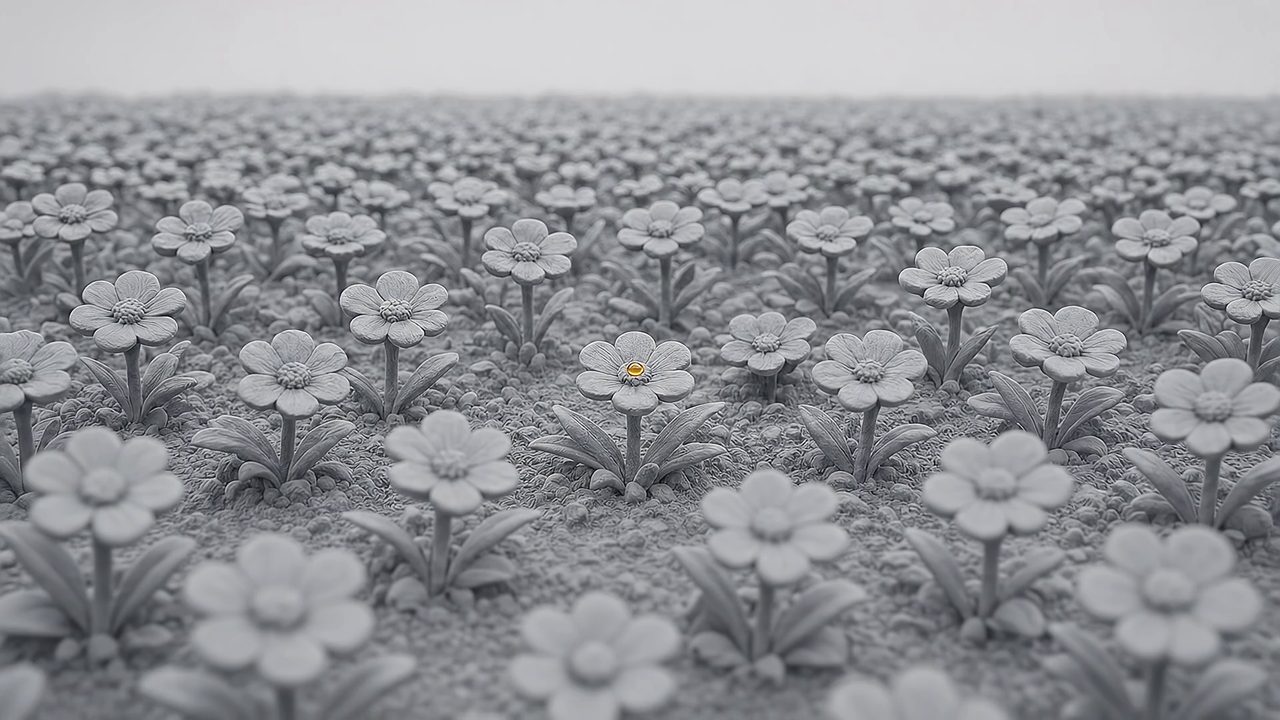
One worker bee makes about one twelfth of a teaspoon of honey in her whole life. Scroll to follow one bead of it, from a flower to a slice of toast.
The flower
It starts as a bead
Whether flowers make nectar at all depends on the weather, so one bad spring can mean no honey that year.
The flight
Dozens of flowers, one honey stomach
On each trip a forager visits dozens of flowers and carries the nectar home in a dedicated honey stomach. To make one pound of honey a colony flies about twice around the world.
The comb
Hexagons, the least wax
In the hive it is stored in hexagons, a shape that holds the most honey for the least wax. Wings fan off the water until barely a fifth is left.
The spin
The comb stays whole
Spinning flings the honey out and leaves the comb whole, so the bees can fill the same wax again.
The filter
Strained slowly
What leaves the extractor still carries flecks of wax. Honey is strained slowly because too much heat spoils its flavour and the enzymes the bees added to it.
The toast
The colony’s own winter food
Bees make honey to survive the winter, so the spoonful on your toast began as the colony’s own winter food. None of it is dramatic, and it is happening again right now in hives on six continents.
The whole route
One drop, one toast
A teaspoon on toast is twelve bee lifetimes of work, and every bead of it began like this one.